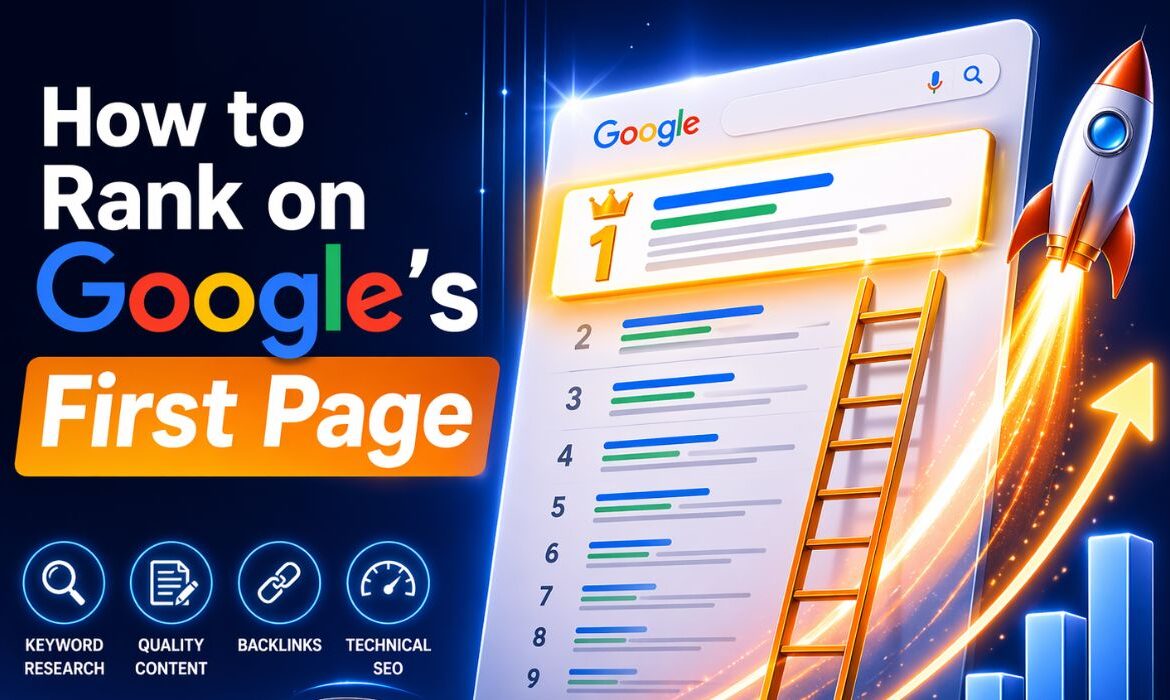
Ranking on Google in 2026 is no longer about stuffing keywords or building random backlinks. Google is smarter, more human-like, and more experience-focused than ever before. If you’ve been struggling to understand how to rank on Google’s first page, this in-depth guide will show you the exact roadmap needed to achieve long-term SEO success.
Whether you’re a business owner, marketer, or SEO professional, this guide will help you build a strong presence in both organic search and AI-generated search results (SGE).
Let’s dive in.
The New Era of Google Rankings (2026 SEO Revolution)
If you think SEO works the same way it did two years ago, think again. Google has upgraded its entire search ecosystem with:
- AI-powered ranking models.
- Search Generative Experience (SGE).
- Experience-based ranking signals.
- Improved understanding of intent.
- Tougher guidelines against spam and AI-abuse.
To rank on Google’s first page, you need to align your content with Google’s mission:
Provide the most helpful, accurate, and experience-backed content.
This article will guide you through everything you need to win on search in 2026, from creating helpful content to optimizing technical SEO to leveraging Local SEO Service strategies.
How Google’s Algorithm Works in 2026
Google’s algorithm is now built on AI systems that focus on:
- User Intent: Google wants to match users with the most relevant results.
- Experience (EEAT: Experience, Expertise, Authority, Trust): Real-world insights matter more than generic content.
- Search Generative Experience (SGE): Google uses AI to generate instant answers from multiple sources.
- Behavioral Signals: User engagement, scrolling patterns, bounce rate, and dwell time matter.
- Website Quality: Fast, mobile-responsive websites with strong technical foundations rank higher.
To succeed in SEO and Digital Marketing, you must optimize for all of these simultaneously.
Search Intent is the Number One Ranking Factor in 2026
Google’s AI understands what users actually want, even when their keywords aren’t clear.
Types of Search Intent:
- Informational – “How to Rank on Google’s First Page in 2026”
- Navigational – “Google Search Console login”
- Commercial – “best SEO services 2026”
- Transactional – “hire digital marketing agency India”
If your content doesn’t match the user’s purpose, Google suppresses your page automatically.
To win, you need to create content that anticipates questions, removes friction, and gives the most detailed, practical solution.

Keyword Research in 2026 (Beyond Traditional Keywords)
Keyword research is no longer just about finding high-volume keywords. You must focus on:
- Entities: Google understands topics as interconnected concepts.
- Topical Authority: Cover an entire subject, not just random articles.
- Conversational Queries: People search using long, natural phrases like. “how to rank on Google’s first page without backlinks.”
- Zero-Click Searches: SGE often gives instant answers, so your content must aim to be a source for those answers.
Modern Keyword Strategy:
- Target high-intent long-tail keywords.
- Use question-based queries.
- Focus on problem-solving content.
- Analyze People Also Ask (PAA)
- Check competitors’ ranking pages
Your keyword strategy must support the larger goal: proving your authority on the topic.
Creating High-Quality “Helpful Content” (The New SEO King)
The Helpful Content System now evaluates each page based on:
- Originality: No reworded AI content.
- Experience: Showcase real examples, case studies, screenshots, data, and insights.
- Practical Value: Give step-by-step guidance, checklists, and clear solutions.
- Human Tone: Write in a natural, conversational way.
- Depth: Thorough, comprehensive content always wins.
Google rewards content that feels like:
- Written by a real expert.
- Based on first-hand experience.
- Deeply researched.
- Useful for users.
If your goal is to learn how to rank on Google’s first page, your content must be more helpful than every competing page.
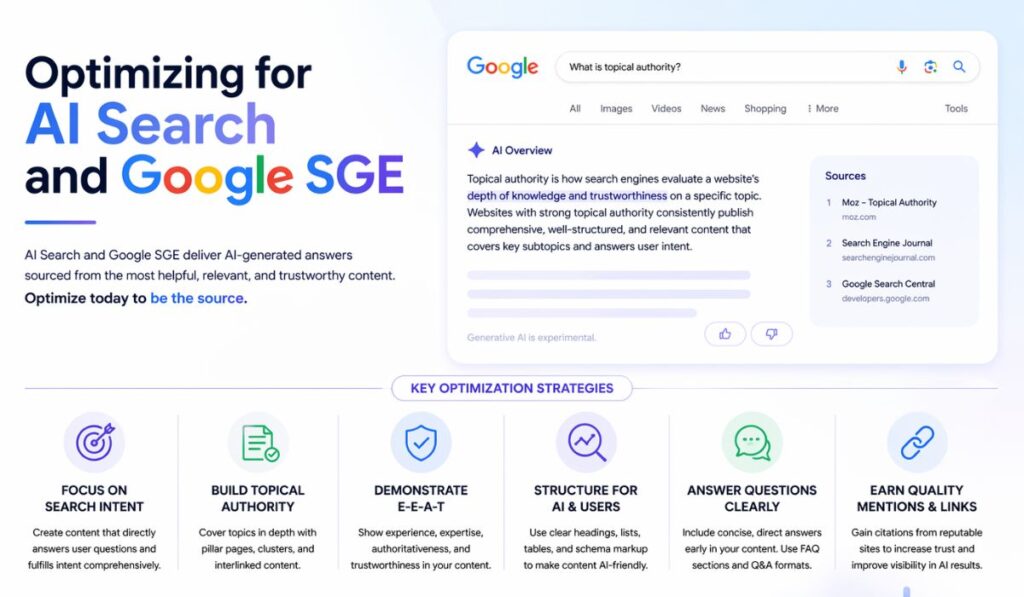
Optimizing for AI Search and Google SGE
In 2026, most users see AI-generated summaries before they see organic links. To appear as a trusted source in SGE, your content must include:
Structured, Scannable Content
- Short paragraphs
- Bullet lists
- Numbered steps
- FAQ-style answers
Schema Markup
- FAQ schema
- How-to schema
- Local Business schema
- Article schema
Direct, Concise Answers
SGE chooses content that gives quick, helpful solutions.
Expert-backed Insights
Google favors high-credibility sources.
If your page is chosen as a reference for SGE, your organic traffic can skyrocket.
On-Page SEO Essentials (Still Crucial)
Even with AI integration, on-page SEO still impacts your ranking.
Optimize:
- Title Tags
- Meta Descriptions
- Header Tags (H1, H2, H3)
- Keyword Placement
- Alt Text
- Internal Linking
- URL Structure
Combine on-page SEO with helpful content, and you’ll see dramatic ranking improvements.
Technical SEO: Foundation of Ranking
Technical SEO ensures Google can crawl, understand, and rank your site.
Core Technical Factors:
- Website Speed.
- Core Web Vitals.
- Mobile-first design.
- XML Sitemap
- Robots.txt
- Structured data
- No indexing issues
- Secure hosting (HTTPS)
If your website loads slower than your competitor’s, ranking becomes much harder.
Link Building in 2026 (Quality Over Quantity)
Backlinks still matter, but not the way they used to.
Google now evaluates:
- Source credibility
- Niche relevance
- Natural linking patterns
- Brand mentions
Best Link-Building Methods in 2026:
- Digital PR
- Expert roundups
- Unique data studies
- Testimonials
- High-value guest posts
- Local business citations
Bad backlinks can lower your rankings, so focus on natural link acquisition.
The Power of Local SEO Service (A Must for Local Businesses)
If your business relies on local customers, ranking locally is more important than ever.
A professional Local SEO Service helps with:
- Google Business Profile optimization
- Local citations
- NAP consistency
- Local keyword ranking
- Review generation
- Geo-targeted content
- Map pack rankings
Google prioritizes businesses that show:
- Proximity
- Relevance
- Trust
- Positive experiences
Local SEO is a must for any small or regional business trying to dominate its city or area.
User Experience and Engagement Signals
Google tracks how users interact with your website.
Strong UX improves:
- Conversion rate
- Engagement
- Dwell time
- SEO rankings
Must-have UX components:
- Fast loading time
- Clean layout
- Easy navigation
- Interactive visuals
- Clear CTAs
- Mobile responsiveness
If users enjoy your website, Google rewards you automatically.
Content Distribution for Faster Rankings
Creating content isn’t enough. You must promote it.
Best distribution methods:
- Social media
- Email marketing
- PPC ads to push high-value SEO pages
- Influencer amplification
- YouTube video repurposing
- Infographics
The more traction your content gets, the faster it will rank.
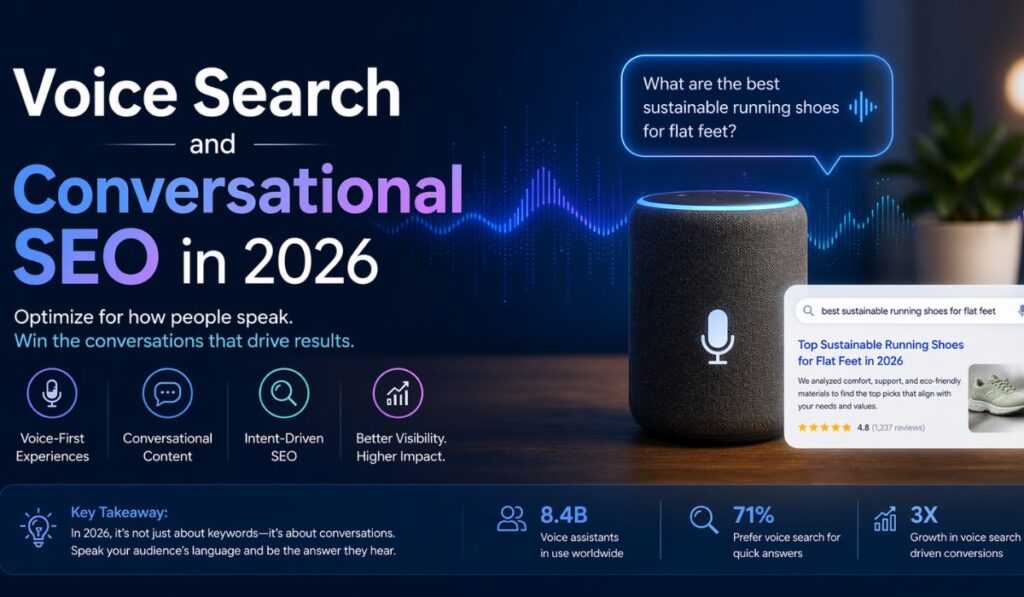
Voice Search and Conversational SEO in 2026
Voice search continues to grow as people use:
- Smartphones
- Smart speakers
- Car voice assistants
Optimize for voice search:
- Natural language
- Direct answers
- FAQ sections
- Conversational content
Long-tail queries dominate voice search, making them powerful for SEO.
Common SEO Mistakes to Avoid in 2026
Many businesses struggle because they unknowingly sabotage their SEO efforts.
Avoid:
- Keyword stuffing
- Thin content
- Duplicate content
- Low-quality backlinks
- Poor mobile experience
- Writing only for AI
- Ignoring search intent
- Not optimizing Local SEO Service
Fix these mistakes, and your rankings will improve dramatically.
Best SEO Tools for 2026
Some must-use tools:
- Google Search Console
- Google Analytics 4
- Ahrefs
- SEMrush
- SurferSEO
- ScreamingFrog
- ChatGPT for ideation
- Local SEO tools like BrightLocal
Using the right tools helps streamline your Digital Marketing strategy.

2026 SEO Strategy: Month-by-Month Roadmap
Month 1:
- Keyword research
- Technical SEO fixes
- Competitor analysis
Month 2:
- Content planning
- On-page optimization
- Initial backlink outreach
Month 3:
- Publish authority articles
- Local SEO optimization
Months 4 to 6:
- Link building
- Improving UX
- Updating old content
Months 6 to 12:
- Continuous content creation
- Strong Digital Marketing campaigns
- Tracking and refinement
SEO takes time, but with consistency, you will see results.
How Long Does It Take to Rank on Google’s First Page?
With the right strategy:
- Low-competition keywords: 45 to 90 days.
- Medium competition: 3 to 6 months.
- High competition: 6 to 12 months or more.
Factors that impact ranking speed:
- Content quality.
- Domain authority.
- Backlink profile.
- Technical health.
- Industry competition.
SEO is a long-term investment with high ROI.
Conclusion: Future-Proof Your SEO Strategy
Ranking on Google’s first page in 2026 requires more strategy, authenticity, and helpfulness than ever before. If you master search intent, publish high-value content, use Local SEO Service strategies, optimize technically, and build strong authority, your website will rise to the top.
SEO is not just a Digital Marketing strategy anymore. It is a long-term business growth engine.
If you want help dominating your niche or need your next SEO-optimized article, Google Business post, or high-converting content, just let me know.
FAQs About Ranking in 2026
Ans: The number one ranking factor in 2026 is search intent. Google rewards pages that perfectly match what the user is looking for. If your content answers the user’s question better than anyone else, you have a high chance of ranking on Google’s first page.
Ans: Ranking time varies based on competition and website authority.
- Low competition keywords: 45 to 90 days
- Medium competition: 3 to 6 months
- High competition: 6 to 12 months
Quality content, technical SEO, and strong backlinks can speed up the process.
Ans: Yes, AI-assisted content can rank, but only if it is enhanced with human expertise, real experience, unique insights, and helpful value. Pure AI-generated or rewritten content without expertise will not rank.
Ans: Local SEO is more important than ever. Businesses must optimize their Google Business Profile, build local citations, maintain consistent NAP details, and gather reviews. A Local SEO Service is essential for ranking in the Map Pack.
Ans: Helpful, experience-driven, and comprehensive content ranks best.
This includes:
- Step-by-step guides
- Case studies
- FAQs
- Problem-solving topics
- In-depth long-form content
Google prioritizes content that demonstrates real expertise and provides genuine value.
Ans: Yes, backlinks still matter but quality is more important than quantity. Google gives higher weight to relevant, authoritative, and naturally earned backlinks from trusted sources, digital PR, and niche websites.
Ans: The most important technical SEO factors are:
- Website speed
- Core Web Vitals
- Mobile-first design
- Clean site architecture
- Structured data
- Secure HTTPS
If your website loads quickly and is easy for Google to crawl, your rankings improve significantly.

